Your Topics | Multiple Stories – Storytelling In A Multi-Narrative World
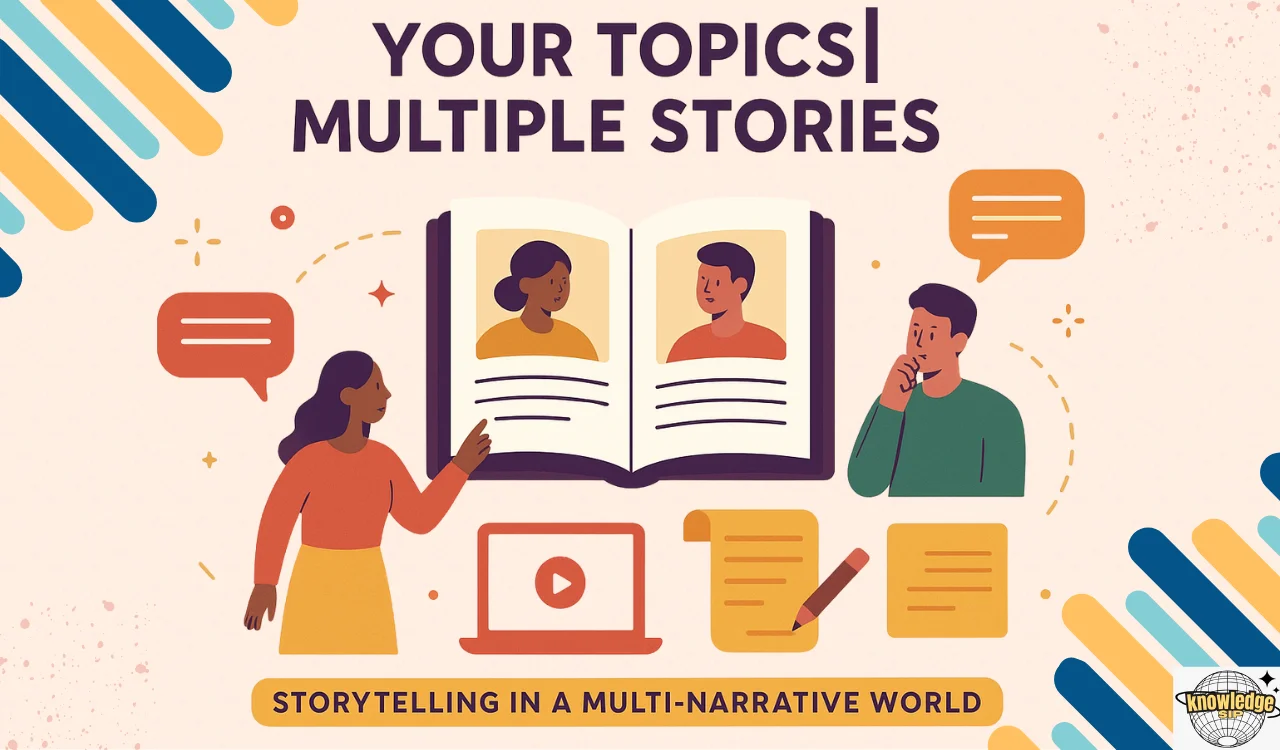
Storytelling isn’t just about what happens, it’s about how it’s seen, felt, and remembered. Every moment carries multiple truths, and the magic lies in weaving them together.
Imagine sitting in a coffee shop, sipping your latte, when a sudden argument breaks out at the next table. One storms out, another stays in tears, and the waiter just rolls his eyes.
If you asked each of them what just happened, you’d hear three different stories:
This is the essence of your topics | multiple stories storytelling in a multi-narrative world. It’s about exploring one theme through varied perspectives and weaving them into richer, more meaningful connections.
Whether you’re a writer, brand, marketer, or creator, this approach helps you share more than one version of the same truth and make it resonate.
What Does “Your Topics | Multiple Stories” Really Mean?
At its core, this is a concept that transforms one simple idea into a whole universe of perspectives. Instead of telling just one version, you spin out multiple storylines, each with its own voice, angle, and emotion.
Think of it as story layering, every layer adds depth, color, and meaning. By showing different sides of the same theme, you’re not just telling a story, you’re inviting your audience to step in, explore, and discover the truth that resonates with them most..
Why Multi-Narrative Storytelling Matters Today?
Modern audiences are diverse, skeptical, and constantly online. They don’t just want to consume content; they want to feel it, relate to it, and see themselves reflected in it.
Here’s why it works so powerfully:
You can also get the proper guidance about the Unsent Message Project and share your thoughts, and also learn how it explores emotional storytelling and connection.
Key Elements Of The Multi-Narrative Approach
Here’s a breakdown of how you can bring it to your life:
| Element | Description | Example |
| Core Topic | The main subject that anchors all stories. | “Artificial Intelligence (AI)” |
| Perspectives | Different angles, voices, or timelines exploring the topic. | Historian, User, Researcher, Futurist |
| Formats | Using diverse media to tell each story. | Blogs, podcasts, videos, infographics |
| Audience Interaction | Two-way communication to refine and expand narratives. | Polls, Q&A sessions, community forums |
| Thematic Consistency | Ensuring all stories connect back to one golden thread (theme). | “AI as a force shaping the future” |
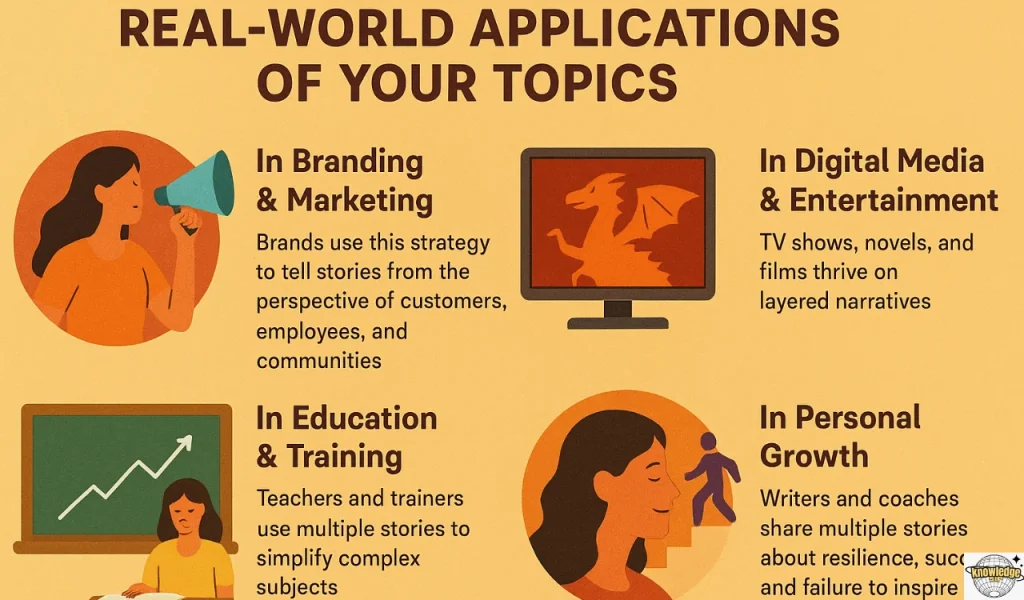
Real-World Applications Of Your Topics | multiple stories
1. In Branding & Marketing
Brands use this strategy to tell stories from the perspective of customers, employees, and communities.
- Example: Nike highlights athletes, designers, and activists to strengthen its brand story.
2. In Digital Media & Entertainment
TV shows, novels, and films thrive on layered narratives. Animeidhen shows how streaming, community, and culture hook audiences worldwide.
- Example: Game of Thrones shows the same world from dozens of character perspectives.
3. In Education & Training
Teachers and trainers use multiple stories to simplify complex subjects.
- Example: Explaining climate change with scientific data, farmer experiences, and student activism.
4. In Personal Growth
Writers and coaches share multiple stories about resilience, success, and failure to inspire.
- Example: Memoirs blending personal struggles with external perspectives.
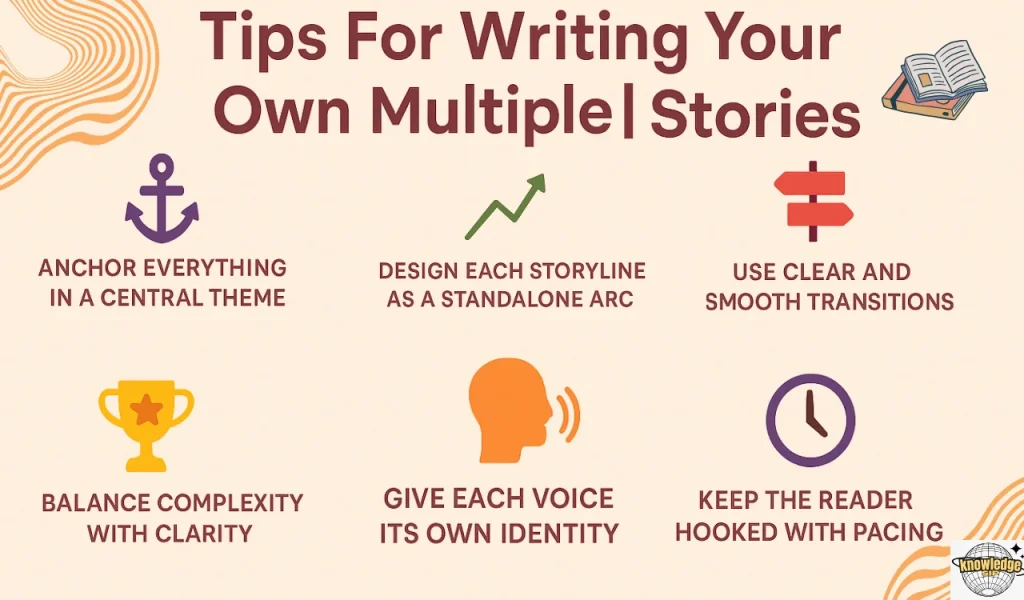
Tips For Writing Your Own Multiple Stories
Creating layered, interconnected narratives can feel challenging at first, but with the right approach, you can transform a single idea into a captivating web of perspectives. Here are the refined steps to help you master this craft:
1. Anchor Everything In A Central Theme
Your story needs a unifying heartbeat. Whether it’s about resilience, love, power, or truth, this theme should guide every perspective and storyline, ensuring the narrative feels cohesive rather than scattered.
2. Design Each Storyline As A Standalone Arc
Before weaving them together, strengthen each plotline individually. Every character or perspective should have a beginning, middle, and end that works on its own. A weak arc will drag the whole narrative down.
3. Create Natural Connection Points
Think of your different plots as puzzle pieces. Use overlapping events, secrets revealed, or characters crossing paths to bind these pieces into one seamless picture. These intersections are where your theme will shine brightest.
4. Use Clear And Smooth Transitions
Readers need guidance as they move from one perspective or timeline to another. Use chapter breaks, dates, character names, or location tags to make the switch feel natural and avoid confusion.
5. Balance Complexity With Clarity
The beauty of layered storytelling is its richness but don’t overwhelm your readers. Mix simple, accessible explanations with deeper, more complex insights. Always keep clarity at the forefront.
6. Give Each Voice Its Own Identity
Every perspective should feel unique. Play with tone, vocabulary, and rhythm to ensure no two characters sound the same. This adds depth and prevents monotony. Blogsternation empowers writers to craft multi-perspective blogs where every voice feels unique.
7. Keep The Reader Hooked with Pacing
Don’t linger too long on one thread and neglect another. Alternate between perspectives strategically, ending sections with small cliffhangers so readers stay curious about every storyline.
Techniques To Build Multiple Stories Around One Topic
1. Multiple Points Of View (POVs)
Tell the same event through different characters’ perspectives. Each lens adds bias, emotion, and meaning, creating a fuller picture.
Example: A robbery told by the thief, the victim, and the police officer.
2. Parallel Timelines
Blend past and present to show how earlier events shape current outcomes. This adds suspense and deeper context.
Example: A startup founder’s early struggles compared with their company’s success today.
3. A-Plot And B-Plot
Strengthen the main storyline with a connected subplot. It mirrors real life and makes the story multi-layered.
Example: A film about corruption paired with a subplot of family betrayal.
4. Anthology Style
Create separate, self-contained stories tied by a theme, setting, or object. It offers variety while staying unified.
Example: Different short stories tied to a single neighborhood café.
How Proximate Solutions Applies The Multi-Narrative Method
At Proximate Solutions, we’ve built content strategies rooted in your topics | multiple stories.
This ensures every voice counts and every story matters.
Common Challenges & How To Overcome Them
Confusion Risk
When juggling multiple stories, there’s always the danger of overwhelming your audience. Too many threads without structure can feel messy. To avoid this, focus on clarity, use clear sequencing, strong themes, and guideposts that help readers follow along without getting lost.
Uneven Story Strength
If one narrative feels weak compared to the others, the entire piece suffers. Every storyline should be compelling enough to stand on its own.
Strengthen weaker arcs with deeper character motivations, stronger conflicts, or more vivid details so they hold equal weight.
Bias
Multiple stories are meant to represent different sides, but personal or cultural bias can sneak in. Actively seek diverse voices, experiences, and sources to ensure you’re showing a balanced view rather than a one-sided narrative.
Many platform illustrates how covering stories from multiple angles reduces bias and broadens the audience perspective.
Explore Scoopupdates.com – Delivering The Latest News & Trends
Transitions
Shifting from one storyline to another can be jarring if not handled well. Use clear markers like chapter titles, dates, character names, or even subtle thematic cues. This way, readers instantly understand the switch and stay immersed.
Quora Insights On Multi-Narrative Storytelling
Quora users praised Your Topics | Multiple Stories for showing how a single theme can be explored from different angles. They found it valuable for creating richer, layered narratives that truly engage readers.
Many noted that the guidance on building standalone arcs and connecting storylines made even complex multi-perspective stories manageable. Examples like parallel timelines and A/B plots helped them see practical applications.
Overall, the method was seen as boosting empathy, critical thinking, and engagement. Contributors recommended it for writers, marketers, and creators aiming to make stories more immersive and relatable.
Conclusion
The world isn’t one-dimensional, and neither should your stories be. Your topics | multiple stories is more than a method; it’s a mindset. By weaving multiple voices into one theme, you make your narratives more authentic, relatable, and unforgettable.
Whether you’re a writer, brand strategist, or creator, the future belongs to those who can tell more than one story at a time because every voice adds value, and every story has power.
So, the next time you sit down to create, ask yourself, Am I telling just one story, or am I opening the door to many? Your audience is waiting for depth, diversity, and connection. Give them one topic, many stories.